
In Australia, we’re no strangers to the occasional emergency, whether it’s a small accident at home, a work injury or something more serious.
No one expects these things to happen, but that’s why it’s so crucial to be prepared. Having the right medical supplies on hand offers you the combined benefits of safety and peace of mind.
Countless hospital admissions each year are due to accidents that could have been prevented with basic first aid. And yet, you’d be surprised at the number of people who have first aid kits lying around that are either outdated, low on medical supplies or not even fully equipped for an emergency.
What a Good First Aid Kit Should Contain
The following items are non-negotiable in a first aid kit, whether it’s being used in a home or an office:
- Adhesive bandages (various sizes)
- Sterile gauze and medical tape
- Antiseptic wipes or solution
- Pain relief medications (such as paracetamol or ibuprofen)
- Disposable glove and the person you’re helping.
- Scissors and tweezers
- Stainless steel scissors for cutting gauze or tape.
- Tweezers for removing splinters or glass.
- Safety pins for securing bandages.
- Disposable gloves to prevent cross-contamination.
- A thermometer for monitoring fevers.
- A first aid booklet for quick guidance during emergen
Why Medical Supplies Should Be Fully Stocked at All Times
These medical supplies need to be readily available at all times:
First Aid Kits
As for being prepared for emergencies, having a first aid kit stocked with the right supplies is one of the most important things you can do. It’s the first line of defence when an accident or injury happens
In Australia, there are strict regulations when it comes to workplaces, especially for those in industries like construction, manufacturing, or healthcare. For example, Australia-Wide First Aid outlines the minimum contents required for a workplace first aid kit, depending on the number of employees.
The needs of your home, workplace, or industry will vary, so it’s essential to customise your first aid kit based on the specific environment and the types of injuries or emergencies that are most likely to occur.
At home, your first aid kit should reflect the unique risks and activities of your household. For example, if you have young children, you’ll want to make sure your kit includes extra items for minor cuts, scrapes, burns and poisoning, and all the things that can happen with little ones around.
You might also want to stock up on cold packs for bumps and bruises or finger splints in case of a broken bone.
Another important factor in customising a first aid kit is the health needs of the individuals who might use it. For example, if you or a family member has diabetes, you’ll want to include insulin, glucose tablets, and syringes.
People with severe allergies should have antihistamines and epinephrine auto-injectors on hand. Individuals with asthma should have a spare inhaler in their first aid kit, as should anyone with a history of epileptic seizures, you never know when an emergency may spring up and you can’t afford to be caught off guard.
Also Read: The Difference Between General and Specialised First Aid Kits
Defibrillators
Around 30,000 cases of cardiac arrests happen every year outside of hospitals, and the survival rate for these out-of-hospital cardiac arrests is only about 11.7%. That’s not a great number when you stop and think about it.
The difference between life and death often comes down to whether someone nearby knows how to act quickly, and whether you have an Automated External Defibrillator (AED) on hand.
When someone has a cardiac arrest, they need immediate care. The faster you can get an AED on them, the higher their chances of survival. For every minute that goes by without using an AED, survival chances drop by 10%. This means that by the time paramedics arrive, often it’s too late. You have to act right away.
When you open an AED, it will automatically analyse the person’s heart rhythm, and it will only deliver a shock if necessary. You don’t need to think for yourself; the device will tell you exactly what to do.
It’s great to see that in many areas of Australia, AEDs are becoming as common as fire extinguishers. There’s a real push to install them in workplaces, schools, gyms, and even public spaces because we all know cardiac arrest can happen anywhere. The goal is to make sure no one has to wait for help in those critical moments before emergency services can arrive.
Wound Care Items
Wound care is something that needs to be stocked up on, no matter what. The last thing you want is to be caught off guard without the right supplies when an injury happens.
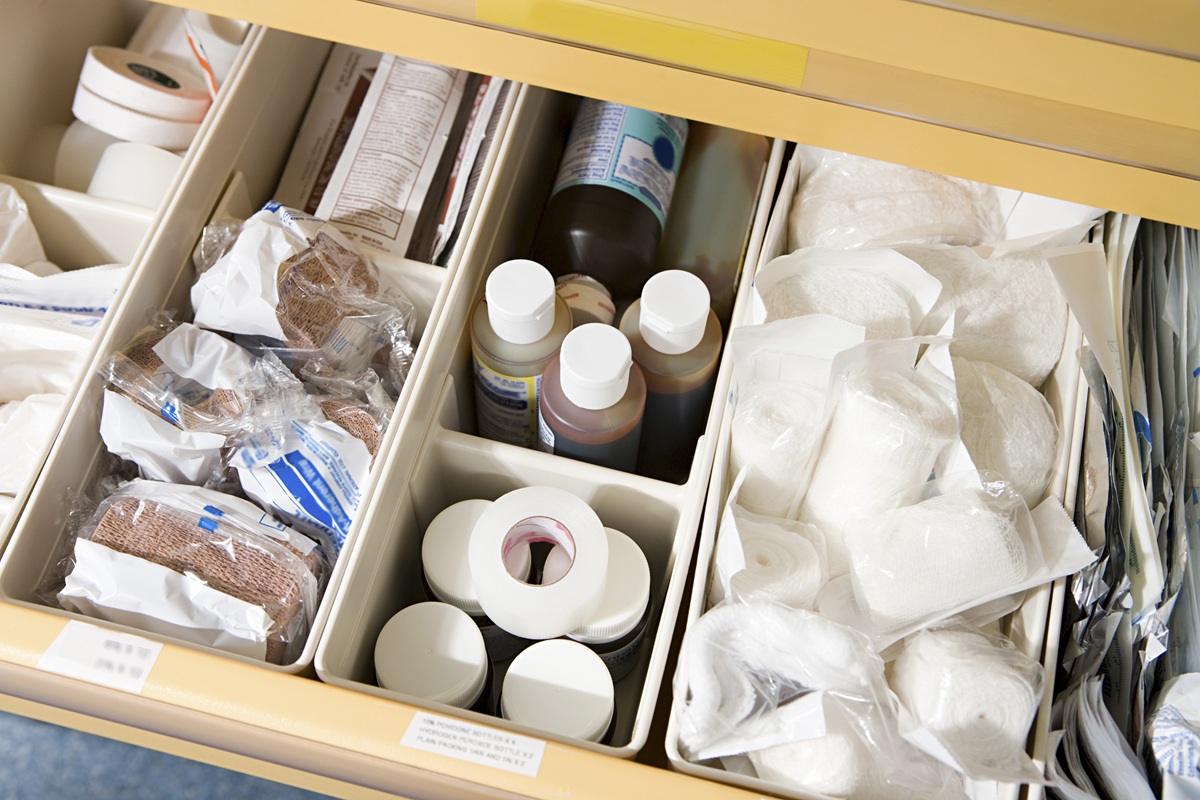
For basic wound care, it’s important to have a few key items. First, sterile dressings and bandages are a must. You’ll need a few different sizes to cover all types of injuries. A large wound might need a bigger dressing, so it’s good to have a range of sizes available.
Next, you’ll want antiseptic solutions like Betadine or Dettol. These are crucial for cleaning the wound and preventing infection. Always make sure you have a good supply, because cleaning the wound properly is essential to avoiding complications.
You should also have some elastic bandages on hand. These are useful for sprains or strains, and they can help apply pressure to stop bleeding in more serious cases. They also help to immobilise injured areas so that you don’t make things worse by moving around too much.
When it comes to treating a wound, the steps are pretty straightforward. First, you need to stop the bleeding, then you would have to apply pressure using a clean cloth or gauze.
Once the bleeding has slowed down, you can clean the wound with an antiseptic solution to reduce the chance of infection. After that, it’s time to dress the wound. A sterile dressing will help protect it from dirt and bacteria, and you can secure it with a bandage.
The Importance of Regularly Checking and Updating Your Kit
It’s not enough to just customise your first aid kit; you also need to regularly check that it’s stocked and updated. Medicine expires, bandages get used up and the items in your kit can get worn out or lost over time.
Make a habit of checking your kit every few months to make sure everything is in good condition and fully stocked, possibly with wholesale medical supplies. It’s especially important to make sure that any medications have not expired and that you replace any used items so that you’re always prepared.
